Sunday, December 3, 2023

                                                 "Crafting Minds through Writing"  - by Shanice Phipps


                                My Perspective on Teaching of Writing 

As I embark on the journey of teaching writing, I cannot help but to reflect on how I viewed writing prior to taking this course. Personally, writing has been a challenging aspect of Language Arts and is not a strong-suit of mine as I sometimes struggle with being expressive. Writing seemed like a lengthy, boring process and as an infant teacher throughout my years, I did not have to engage in in-depth writing with my students. I have always admired a 'good' piece of writing, nonetheless. 

I believe that challenges are good opportunities for growth and thankfully, I have acquired a variety of writing strategies and mechanisms that have helped me to develop a love for writing and the teaching of writing. By implementing differentiated instruction, providing constructive feedback, and incorporating engaging writing prompts, I aim to meet students where they are and guide them towards improvement. In addition, considering the writing process along with the conventions of writing, I am now able to continuously improve on my writing abilities and better cater to the writing needs of my students.

Teaching writing is more than just imparting grammatical rules and sentence structures. It's an art that involves unlocking the creative potential within each student. As a teacher in training, I've come to understand that fostering a conducive environment for self-expression is paramount. By creating a safe and encouraging space, students can explore their thoughts, widen their vocabulary, and develop a genuine passion for writing.

Currently, one of the most anticipated aspects of teaching writing is to witness the growth of my students' writing over time. From hesitant beginnings to confident expressions, the evolution of a student's writing skills is a testament to the impact of effective teaching. As I navigate my role in shaping these transformations, I am inspired by the prospect of instilling a lifelong love for writing in my students.

Conclusively, in my journey as a teacher in training, I recognize the profound responsibility and privilege of shaping young minds into articulate and expressive individuals. Navigating challenges and celebrating growth are all integral components of this indelible process. As I continue on this path, my aspiration is not only to teach writing but to ignite a passion for storytelling and self-expression that will resonate throughout my life and my students' lives.

                                                                  Thank-you !!


 Transforming My Outlook: My Journey to Embrace the Joy of Teaching Writing

By: Shaniel Liburd-Bryan


"Self-reflection is an important stage to diagnose, develop, and strengthen your creativity."

                                                                                                               Pearl Zhu


    Writing is challenging when it comes to engaging students and making the writing process exciting, grading students' writing is too tedious of a task, and I am not confident in my own writing abilities. These were all thoughts I had for many years and what I entered this course with. Teaching writing has not always been a passion of mine but recently, I have gained a newfound opportunity to enhance skills because of this task. This experience has left an indelible mark on my teaching journey, equipping me with strengthened confidence and a repertoire of effective strategies that I am eager to employ. As I reflect on how this course has transformed my approach and my mindset to teaching writing, it is my hope that you too can be inspired to change your outlook if your thoughts are how mine were.

    To begin, I will share one of my most significant changes. Since partaking in this course, I have acquired a heightened sense of confidence. I remember vividly how I felt about teaching writing and why I have always turned to team teaching just to avoid teaching it altogether. I felt that I didn't have the knowledge, the confidence, or the training to effectively teach my students writing in a way that would fester a love for it. For me, that was a chance I was not willing to take because as a teacher my main aim is to foster a flame in my students that makes them always eager to learn and enjoy learning. However, this course has taught me various writing techniques, inspired creativity, and supplied some noteworthy ways on how I can help my students express their thoughts with precision and eloquence.

    Another significant aspect of this course was the introduction of the 6+1 Traits of Writing. You might be wondering why I said introduction? Before this, I had never heard about the 6+1 Traits of Writing. Crazy right? This approach broke down the writing into six key traits - ideas, organization, voice, word choice, sentence fluency, and conventions in such a way that I can provide my future students with a comprehensive understanding of what makes a piece of writing effective and impactful. 


    I cannot honestly reflect without crediting the spark that was created to my creativity and passion for making introductions to my lessons more engaging. I was awakened by the amount of writing and reading strategies that are available and that were untouched within my years of teaching. I now have new methods of incorporating interactive games, storytelling, real-life examples, and the inclusion of themes to captivate my students' attention from the start. I am most definitely eager to create an even more stimulating and inclusive learning environment that will increase my students' participation and enthusiasm towards writing. 

    To sum up, this journey in teaching writing has truly been a formative experience for me as an educator. It has instilled confidence, deepened my understanding of the writing process, and sparked creativity in my approach to teaching writing. Armed with new strategies and techniques, I am even more excited to nurture the writing skills of my students, guiding them to becoming confident and proficient writers. I am beyond grateful for this opportunity to grow and evolve as an educator.


             Thank you for sticking around.........


And remember......


Unlocking Creativity: A New Perspective on the Teaching of Writing!


Welcome back to my blog!! This week's topic shifts from the realm of poetry to my perspective on the teaching of writing.

As a student teacher, my exploration of how to teach writing has been an eye-opening journey. Initially, I saw writing as a straightforward, rule-based activity primarily focused on grammar and structure. But my perspective has been reshaped, especially after engaging with the 6+1 Traits of Writing framework and understanding the nuances of the Writing Process.

I remember sitting there, absorbing the discussions, and realizing how writing can be a powerful medium for students to explore their thoughts, emotions, and experiences. It was enlightening to understand that writing could be therapeutic, a form of personal journey, and a way to connect with others on a deeper level. The art of teaching writing, I've learned, is not just about imparting knowledge of syntax and punctuation. It's about nurturing a student's voice, encouraging creativity, and fostering a safe space for expression.

During the discussions the importance of encouraging students to write freely, without the fear of judgment or strict adherence to rules was also highlighted. This approach, we learned, helps in developing confidence and a genuine love for writing. It was an 'aha' moment for me - realizing that the freedom to make mistakes, to experiment with words, and to express oneself unfiltered is crucial in teaching writing.

Moreover, we explored various techniques to make writing engaging and relevant for students. From using prompts that resonate with their lives to incorporating digital tools and multimedia, the emphasis was on making the writing process dynamic and relatable. This approach aligns perfectly with my belief that education should be a blend of relevance and engagement.

Teaching writing, I now understand, is not just about molding proficient writers but about cultivating thinkers, storytellers, and individuals who can articulate their worldviews with confidence and creativity.

Reflecting on this journey, my attitude towards teaching writing has transformed. I no longer see it as a mere academic requirement, but as an opportunity to inspire, engage, and empower students. The prospect of being a part of a student's writing journey excites me, and I eagerly look forward to the day when I can apply these insights in my own classroom.

By

• TEKOYAH MASON •


Monday, November 27, 2023

 During our virtual class lesson , We had to give her thoughts on reasons why we love poetry and why we dont . Each side had to give their views . The questions were given reasons why you love poetry and why you don't love poetry . Responses were written on the Jam board and read orally by the lecturer .some students were questioned about their responses and the teacher clarified .

Additionally , we got more information about the reasons for poetry , the lecturer gave reasons like give expressions and that it is unique it helps persons to feel while they are reading , putting themselves in it seeing the world in a different light , it is said that some poems can make us laugh, make us get into our feelings . When writing poems we must always choose our words carefully , whether they are creative so they can understand .

As children read poem, they should have a natural flow . They are different ways to bring out poem eg songs, verses and rhymes especially for the infant classes NB,When creating  a poem you also have to follow the writing process eg revise , edits and share their writing . While doing poetry I've also learned that they are different types of poems eg preposition poems , wish poems, free verse, acrostic poems, bilingual, concrete and found poems .

Prepositions poems are poems begins with prepositions 

Wish poems : Poems starts with I wish 

Free verse : It is an un rhymed poetry using word choice and visual images take on greater importance .

Acrostic Poems : Using key words 

Bilingual Poems: Inserting words from the other languages into their poems .

Concrete poems. Arranging words to form a picture helps convey meaning .

Found poems : By ailing words from other sources such as news paper articles songs, and stones .

List poems : create a poem using words and phrases from a list they brain scorned.


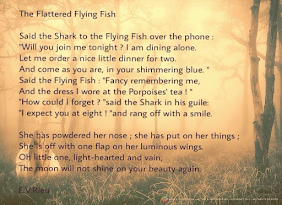
As the class continued I've learned something new that when you are doing poetry , you use alphabetical order according to the letter sound .We did two poems : The flattered flying fish  and the  sea is a hungry dog .


In conclusion using poems in class is a great choice as it helps with class lessons as it helps .I also gained a lot of information about poetry and how it is orchestrated . Poetry can bring color to a lesson and class room interaction .


Sunday, November 26, 2023

Poetic Pencils: A Student's Toolkit for Poetry Writing

Welcome back to my blog...this week's topic is 'POETRY.'


As I logged into the virtual classroom, little did I anticipate that a pair of digital boards would become the stage for a unique exploration of emotions, perspectives, and the often-misunderstood realm of poetry. Our lecturer initiated a poetic dialogue by dividing us into two camps—those who declared themselves "lovers of poetry" and those who candidly admitted to being "nonlovers." This simple act set the tone for an engaging online session that delved deep into the intricacies of teaching and embracing the art of poetry.
I found myself hesitating before confessing my poetic bias: "Poetry is often challenging to understand. The complexity is frustrating, especially if the meaning isn't immediately clear." Little did I know that this admission would become the steppingstone for a transformative journey into the world of poetry.


As we navigated through the discussion, the spotlight turned to our individual teaching experiences. I found myself revealing a truth—I never explicitly taught poetry. Instead, I focused on literary devices, the building blocks that construct the poetic tapestry. This
confession sparked curiosity and led us to the core question of the day: How can we, as educators, instill a genuine love for poetry in our students?


Our lecturer brilliantly redirected our focus from the overused rhyme schemes to the rich palette of poetic elements. We explored reading expressively, using figures of speech, unraveling rhyming patterns, painting vivid imagery, and appealing to the senses. The class unanimously agreed: it was time to break free from the monotony and introduce students to the diverse and captivating facets of poetry.

The real magic happened when poems like "The Sea" and "The Flattered Flying Fish" took center stage. The spotlight was not just on the words but on how we brought them to life. I, too, faced the challenge of infusing my voice with the emotions embedded in the verses, realizing that reading with expression is the key to unlocking a poem's true essence.


We explored innovative ways to make poetry come alive in the classroom—role plays, expressive readings, and the revelation of a new concept for me: deciphering a poem's rhyming pattern. The session unfolded as a roadmap, guiding us through a step-by-step process to dismantle the perceived complexity of poetry for our students.

As the class unfolded, we were showered with practical teaching ideas: guiding students to identify imagery, appealing to their senses, introducing figures of speech, and carefully selecting poems that resonate with their interests and grade levels. The goal? To make poetry not just a subject but an experience.

In the end, I left the virtual classroom not just with newfound knowledge but with an eagerness to share the poetry journey with my future students. The session, with its blend of insights and interactive activities, transformed my perception of poetry from a daunting task to an exciting exploration. As I reflect on the class, I can't help but anticipate the day when my students will embark on their own poetic adventures, guided by the lessons learned in that enlightening session. It was more than a discussion; it was an invitation to dance with the beauty of language, to explore the depths of expression, and to nurture a love for poetry that extends beyond the confines of a classroom.

by
• TEKOYAH MASON •

"Guiding Students Through the World of Poetry”  

By: Shaniel Liburd-Bryan


Continuing to learn about the different genres and types of writing pieces, we focused our attention on Poetry. To begin the session, my classmates and I were given the first task : 
 
"To state whether or not we like poetry and why"

I joined a group of people who didn't love poetry. My reason was that I felt it was difficult to understand because it often uses complex language and symbolism. As I wrote that I reflected on my classes during my school days and vividly remembered poems with sentences I couldn't decipher. As well as the teacher who didn't make it much easier to understand or even like the art form. I was always left to wonder:


This brought us to the main topic of the discussion, which was how teachers can instill a love of poetry in their students by teaching them in interesting and entertaining ways. Poetry instruction can cover a variety of subjects, including reading expressively, using figures of speech, rhyming patterns, imagery, and identifying our senses. Instead of rhyming words, which, we have to admit is the most popular and overly used topic when it comes to teaching our students about poetry. 
To demonstrate these topics, poems entitled "The Sea" and "The Flattered Flying Fish" were utilized. We were given step by step process of how we can teach students and how we can break a poem down for students to understand. For example:

  • When it comes to reading with expression, she selected a couple of persons to read the selected poems. This activity highlighted reading with little to no expression can make a seemingly interesting poem to be a bore.

A more engaging way is to model how you'd expect your students to read the poem. Demonstrate voice ranges, expressions, and tones for punctuation marks so students can see how tone and expressions can bring a piece to life. Activities such as role plays were also heavily suggested. 


Another suggestion to teach literature was instead of the norm rhyming words, we should teach students how to find the rhyming pattern of a poem. This was new to me but was very useful.


Some Additional Poetry Teaching Ideas
  • Teach imagery: help students identify words or sentences that help paint a vivid picture of what the author is trying to portray.
  • Appeal to our senses: Identify words throughout the poem that speak about smell, sound, touch, etc.
  • Figures of speech: Open the students' minds to similes, metaphors, onomatopoeia, etc.
  • Poem selection: Choose a poem that is appropriate for the grade level and of interest.

Overall, I thoroughly enjoyed the session and gained tons of insight into teaching poetry. Some of which I can't wait to do with my students.

So, until next time.......


Tuesday, November 21, 2023

 Creating a climate for writing 

Shanice Phipps 


Everyone has heard about the term differentiation , Differentiation is tailoring the needs of students . In a classroom setting , students should feel comfortable and safe . It should contribute to their psychological well being as well as their physical . When planning for a differentiated classroom the lessons must be plan based on the students level of knowledge , skills and ability along with materials , tools .

   Young authors would write about skills and highlight the challenges as a chance to improve . Once they get feedback and encouragement giving them a chance to do their work on their own it is evident  that in every classroom one should always encourage students to do work on their own . I must add, once students understand why writing is important it enhances their communication skills help the to express their emotions and thoughts , once these skills are consistent they will become great writers as time goes by and in return teachers can see students improvement as she will enjoy reading their pieces .

  Creating an Environment that motivates the writers 

Some factors that motivate students are self efficacy , develop self regulated learners , develop internal motivation. Self efficacy gives students a sense of having confidence in themselves which will have a great impact on the decisions they make guiding them . According to Zimmerman, Bandura and Martinez- Pons 1992 states students must believe in their writing ability to be successful in their writing experiences . Develop Self Regulated learners - Zimmer, Bonner , Kovach ( 1996) states that self- regulated students monitor and control their thoughts process in order to learn .

Self regulated learners monitor how they get the information and process it . Self regulated learners , self evaluate ,  monitor , goal setting and have a strategy plan. They put a plan into action and monitor it , They monitor the outcomes . They need to know about their thinking skills as well. 

Applying meta-cognition  skills is also important as well as monitoring oneself . It takes place when a student uses thinking strategies Ferrari and Stern berg ( 1998)Teachers can help by guiding  students though the thinking process that accompany writing during , after an activity . Students motivation increases when they get a choice  and take responsibility for his or her own learning  . Stipek 1996 . Once a teacher is excited about a particular subject matter it helps with intrinsic motivation and it becomes a key factor in developing a self motivated writer .


Create a safe and positive writing atmosphere 

Students are eager to participate in writing experiences . The teacher creates a personalized environment that can help to motivate , challenge and stimulate others to write . Some students do not like when teachers correct their work using a red pen they usually get turned off  even if they know the majority of the information . Once the environment is safe , they will feel free to do things to express themselves .

When writing instructional strategies one must: 

1.Use Slogan and Poster ideas

2.Use the 4 B's 

3.Cool tools 

4.Material Magic 

5.The shape of things 

6.Rainbow castings


Suggestion include : 

Supply reference books and materials 

Use writing lamps 

Give choices 

Provide Word list 

The use of centers - using rooms as writing nooks , centers stations 

Assess the writing climate 

As in a normal setting a teacher is to maintain the tone of the classroom and using a checklist to see students interest.

Monday, November 20, 2023

"Creating a Climate for Writing": A Review


Having thoroughly examined the contents of "Creating a Climate for Writing," I am motivated to express my comments on this interesting scholarly piece. The article highlights the significance of establishing a supportive and motivating environment for aspiring writers in their early years, a sentiment with which I strongly agree.


The article begins with a beautiful analogy, comparing a child entering the world of writing to a butterfly egg hatching in a conducive environment. This sets the tone for the nurturing approach advocated throughout the piece. It stresses the importance of a differentiated classroom where every student's individual needs are acknowledged. This resonates with me because I believe every child has unique writing talents that can flourish in the right environment.


Key themes include instilling self-efficacy and developing self-regulated learners. The concept of self-efficacy, which fosters a belief in one's abilities, is particularly striking. It reminds me of my own journey as a writer, where positive feedback and overcoming challenges played a crucial role in building my confidence. Similarly, the emphasis on self-regulated learning, where students are encouraged to monitor and control their own learning process, aligns with my belief in fostering independent learning skills.


Another aspect that stood out to me is the focus on developing internal motivation. The article underscores the role of intrinsic motivation, driven by factors like curiosity and challenge, in enhancing a student's writing experience. This is something I've personally experienced - when I write about topics that genuinely interest me, my writing is more passionate and effective.


Creating a safe and positive writing atmosphere is also a major focus. It's about treating each piece of writing with respect and ensuring that students feel comfortable taking risks and expressing themselves. This approach is crucial for fostering creativity and originality, which are at the heart of great writing.


The article also discusses practical strategies like varying writing tools and materials, which I find incredibly innovative. Using different mediums like chalk, paint, or even digital tools can make writing more engaging and fun, especially for younger students. This multi-sensory approach to writing can ignite a child's imagination in ways that traditional methods may not.


Lastly, the emphasis on teacher's role in creating this climate is compelling. It's a reminder that educators play a pivotal role in shaping young writers' attitudes and abilities. The teacher's enthusiasm, choice of materials, and the classroom setup all contribute to the writing climate.


Overall, "Creating a Climate for Writing" resonates with me deeply. It aligns with my belief that writing is not just about the technical aspects but also about creating an environment where creativity, individuality, and self-efficacy are nurtured. As someone passionate about writing, I see these insights as invaluable in guiding young writers towards discovering and honing their unique voices.

Sunday, November 19, 2023

 "Creating a Climate for Writing"

By: Shaniel Liburd-Bryan


Creating the perfect writing environment is one that inspires creativity and productivity.  This can boost focus, spark inspiration, enhance comfort, set the right mood, and foster writing habits. As teachers, we must create that space for our students to help them flourish into the writers they can become.

The article "Creating a Climate for Writing" immediately captured my attention by starting with the comparison "When a butterfly egg is hatched in a proper environment, It has everything needed to thrive. When a child enters the writing world, He has everything he needs to become an effective author". With further reading, I was left in agreement with the author. It was very beneficial as it gave numerous strategies we as teachers can utilize to create our very own writing climate in our classrooms.

 The article provides 10 differentiated instructional strategies for writing, including using shapes as learning tools, incorporating color to stimulate the mind, providing ready references, and using various paper sizes to fit writing assignments. It emphasizes creating a climate for writing by using materials related to the content to build interest and motivate the writer.

However, the two that stood out for me were instilling self-efficacy and developing self-regulated learners. I have witnessed firsthand how motivating students, providing them with positive comments, and pouring into them that they can achieve anything can positively change students' efforts and give them the extra push they may need.

To help students with self-regulated learning, the article cited Zimmerman, Bonner, and Kovach's (1996) model that can be used to plan self-regulated experiences for writers, which sadly I have never thought of as it pertains to building self-regulation. The model includes:
  • Sel-evaluation and monitoring
  • Goal Setting and Strategic Planning
  • Putting a plan into action and monitoring it
  • Monitor outcomes and refine them

Overall, when it comes to creating a climate for writing it doesn't just entail the physical environment but also the psychological.  Creating a climate for writing also encompasses providing tools and materials to bring out creativity, a space where positive feedback is welcomed and shared, and helping students plan and execute their learning. 

"When a flower doesn't bloom, you fix the environment in which it grows, not the flower." Alexander Den Heijer


Until Next time........


Wednesday, November 15, 2023

LEARNING ABOUT THE DIFFERENT TYPES OF WRITING!!!

Genre: Expository

By: Shaniel Liburd-Bryan


In preparing for a presentation for my writing course on Exposition I stumbled upon quite a few things that I never knew and am relieved to now know. This information made me realize that I was limiting all I could have done with the topic, the knowledge I could have given my students cleared up some misconceptions and introduced me to many activities that can make lessons more engaging. 

First, I have to start with my misconception. I have always learned that expositions always have an opening sentence or thesis statement and because this is all I knew I sadly passed that on to my students. My preparations and consultation with my lecturer taught me that not all expository pieces have thesis statements. 

I'm sure reading this you are puzzled. I sure was!

I never really observed that the only time an expository piece has a thesis statement was if it is written as an essay. Which led my mind to wonder and realize that it was indeed true. For example, a piece that tells you how to make a cake for instance is an expository, but when it is displayed online you receive the recipe and steps in numbered or bullet form. That was my ohhh!!! moment. It was something worth noting when I reentered the classroom. 

I also learned more ways to utilize the traits and processes in the different types of writing especially exposition. Researching enabled me to find out more about exposition and come across so many different fun activities that can make lessons more engaging and worthwhile like the few displayed below.

Fishing for Errors                         

 A group of colorful tags

Description automatically generated    


Reading Festival

 A New Kind of Festival Inspires Ghana's Youngest Readers | by USAID | USAID  FrontLines | Medium


Musical Papers                                          

 Musical chair drawing. Students draw on a paper until the music stops, then  they move to the next one and c… | Student drawing, Educational projects,  Person drawing    


Pair Writing

 Writing Partners: Authentic Purposes for Writing – TWO WRITING TEACHERS


During our workshop sessions, we were able to use some of the activities found which made the session very interactive and fun. Some activities were Minute to Write, Demonstrate it (with a twist), and spot the errors. 

Try these activities and more in your next class and let me know what you think!

 Until next time........


                                                             "Crafting Minds through Writing"  - by Shanice Phipps                ...